
4 Adductor Exercises to Get Stronger and Prevent Injuries
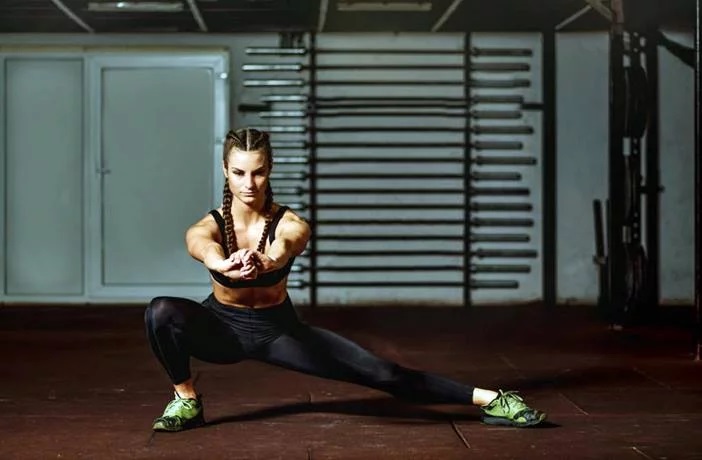
Many athletes neglect their adductors. Weightlifters often focus on their quads, glutes, hamstrings, and, to a lesser extent, their calves. But when your inner thighs are sore or tight, your adductors make their presence felt. Why put up with such potential physical ailments when, instead, you could just pay more attention to your adductors?
What Are Adductors?
The adductors are "a group of muscles on the inside of the thighs" whose primary function involves bringing the legs together and rotating the hips toward the body's midline.
The adductor muscle group comprises:
- Short adductor
- Long adductor
- Adductor magnus (including adductor minimus)
- Pectineus: the most anterior adductor of the hip, allowing hip flexion
- Gracilis: the thin, flat muscle on the medial surface of the thigh
- External obturator: the muscle covering the external surface of the anterior pelvic wall
"The adductors originate from the pubis and ischium bones" (lower pelvis) and attach to the medial posterior surface of the femur (thigh bone).
What Are Adductors For?
The primary role involves adducting—moving "toward the midline of the body"—the hips and thighs. If your legs are open, they help bring them back together. They're also prime movers helping you exit a deep squat.
Additional functions include:
- Hip flexion
- Internal and external hip rotation
- Hip extension
- Pelvis stabilization
- Knee flexion
Why Are Adductors Important?
Prevent Injuries
Training the adductors directly can better prevent groin strains. For athletes in sports requiring running or directional changes, adductor strength should be prioritized.
A 2015 British Journal of Sports Medicine review concluded that "hip adductor strength was one of the most common risk factors for groin injuries" in sport.
Research on professional ice hockey players found they were "seventeen times more likely to sustain a groin injury if their adductor strength was less than 80% of their abductor strength."
Hip Extension and Flexion
Your hips flex and extend during jumping, running, squatting, and deadlifting. Explosive hip extension distinguishes good athletes from great ones.
"The glutes and hamstrings are the primary extensors of the hip," but the adductor magnus also assists. This explains post-leg-day adductor soreness.
Improve Rotational Power
The adductors' ability to internally and externally rotate hips directly relates to rotational power. Athletes in sports requiring swinging or throwing movements benefit greatly from stronger adductors:
- Golf
- Tennis and racket sports
- Hockey (ice and field)
- Baseball
- Soccer
- Lacrosse
4 Exercises for Strong Adductors
Single Leg Glute Bridge with Compression
This exercise trains the straight leg's adductors while training hip extension of the other leg. Squeezing a foam roller or medicine ball ensures "the glutes engage the hip extension rather than the lower back."
Perform 3 sets of 8-12 repetitions per leg after your main strength exercise.
Cossack Squat
This squat "trains the adductors and abductors" while working in the frontal plane. It's excellent for training multidirectional movement, as most strength exercises work along the sagittal plane.
This makes an ideal warm-up before leg day. Add weight if feeling strong enough. Perform 3 sets of 8-12 repetitions.
Copenhagen Side Plank
This side plank variation involves holding position while the top leg adducts against a bench. You should "feel your oblique stepping in and becoming more active to maintain stability" while maintaining adductor stability.
Instead of timing, take 3-5 breaths on both sides.
Rotating Medicine Ball Throw Against the Wall
Any rotational medicine ball throw works; the spoon toss is one example. This drill suits those new to rotary throws.
Medicine ball throws "add power to your workout." Choose appropriate ball weight to train power rather than pure strength. Generate power from the back hip's internal rotation, not the arms.
Perform 2-3 sets of 6-8 repetitions per side before strength training.